Home > Blog > Spotlight On YAFies: Sam and Mishtar
Spotlight On YAFies: Sam and Mishtar
Posted on 1/02/2026, BY HKYAF
Subscribe to our Blog Via Email
Enter your email address to follow this blog and receive notification of new posts by email...
Sam Cheuk
Programme Worker, Hong Kong PHAB Association (New Territories Centre)
Mishtar (Mike and Ishtar)
Artist group
This is the third year that you’ve taken part in the Hong Kong Jockey Club Community Project Grant: stART Up Community Arts Project. What does this ongoing participation mean to you?
Sam: We initially joined to try out something new. But when we saw the finished artworks and the exhibition, we were really amazed. By the third year, we realised that our centre members had grown confident enough to create their original artworks. They have evolved from producing derivative pastel painting or cutting and pasting, to advanced media and materials like galvanised iron, ceramics and dreamcatchers. When we first joined the programme, our members were simply excited to be creative. Now they’re able to focus their thoughts and express their feelings through sophisticated artwork.
How does art connect people with different physical abilities?
Sam: Each member of our centre has developed their own perspective and way of living shaped by their different physical abilities. Art provides an open platform for them to express their inner thoughts – it’s a direct form of communication that doesn’t rely on words.
What were the most challenging and memorable aspects of the inclusive workshops?
Sam: The most challenging aspect was helping members overcome their self-doubt in the creative process. Coordinating times and venues was tricky too. Accommodating the schedules of the student participants meant that the time we had to sit down and focus on creating was limited.
The best part was when the centre members and I visited the exhibition and saw the finished works on display. It was very moving to see their work presented thoughtfully alongside other collections.
What would you like the audience to take away from the exhibition and the artworks created by your centre members?
Sam: That disability of any form, physical or sensory, isn’t an inconvenience. It doesn’t mean “less able” or “fewer” opportunities. What it does mean is a different perspective, a more concentrated experience and a new way of “exploring” potential.
Has being part of this inclusive programme given you new perspectives or insight?
Sam: We knew that our centre members would explore and experience new things but we didn’t anticipate how our feelings would be influenced as well. The staff don’t often participate in niche art forms or exhibitions like this. We gained a deeper understanding of our members through their work and realised that creative expression doesn’t have to be profound or abstract, it can be very down-to-earth and day-to-day.
You’re experienced in working with individuals with different disabilities. What have you learned from interacting with them?
Sam: Even among people with the same form of disability, each individual’s physical condition can vary widely. For example, a wheelchair user who can take a few steps has a completely different life experience from a wheelchair user who is completely paralysed. Patients with cerebral atrophy (brain shrinkage) can have different abilities in terms of language, movement and cognition depending on the region of the brain that’s affected. For this reason, it’s important to genuinely understand each individual’s abilities and needs rather than labelling and defining people by their diagnoses.
How should an ideal inclusive community make its members feel?
Sam: All people, able-bodied and disabled people alike, should feel a sense of opportunity, possibility, harmony and individuality. Rather than having able-bodied people take the lead and simply accommodating people with disabilities, we should encourage everyone to contribute according to their own abilities and play a role in society. It should be about flexible cooperation not black-and-white rules.
What advice do you have for young people with physical disabilities who are passionate about the arts?
Sam: Sometimes you have to acknowledge your limitations in order to explore your possibilities – especially in the arts. It’s all about succeeding within constraints and exploring the beauty of challenges.
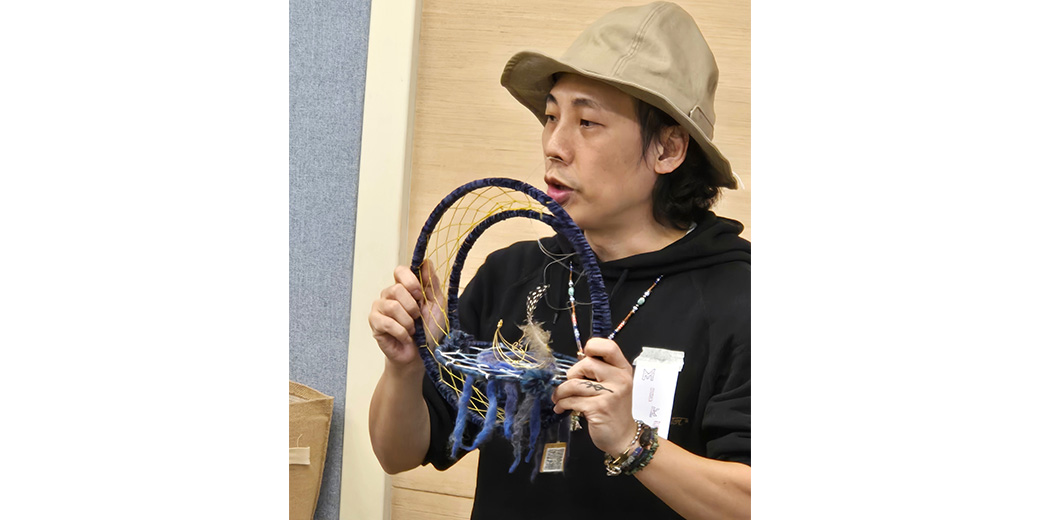
Why did you choose to make dreamcatchers in your creative workshops?
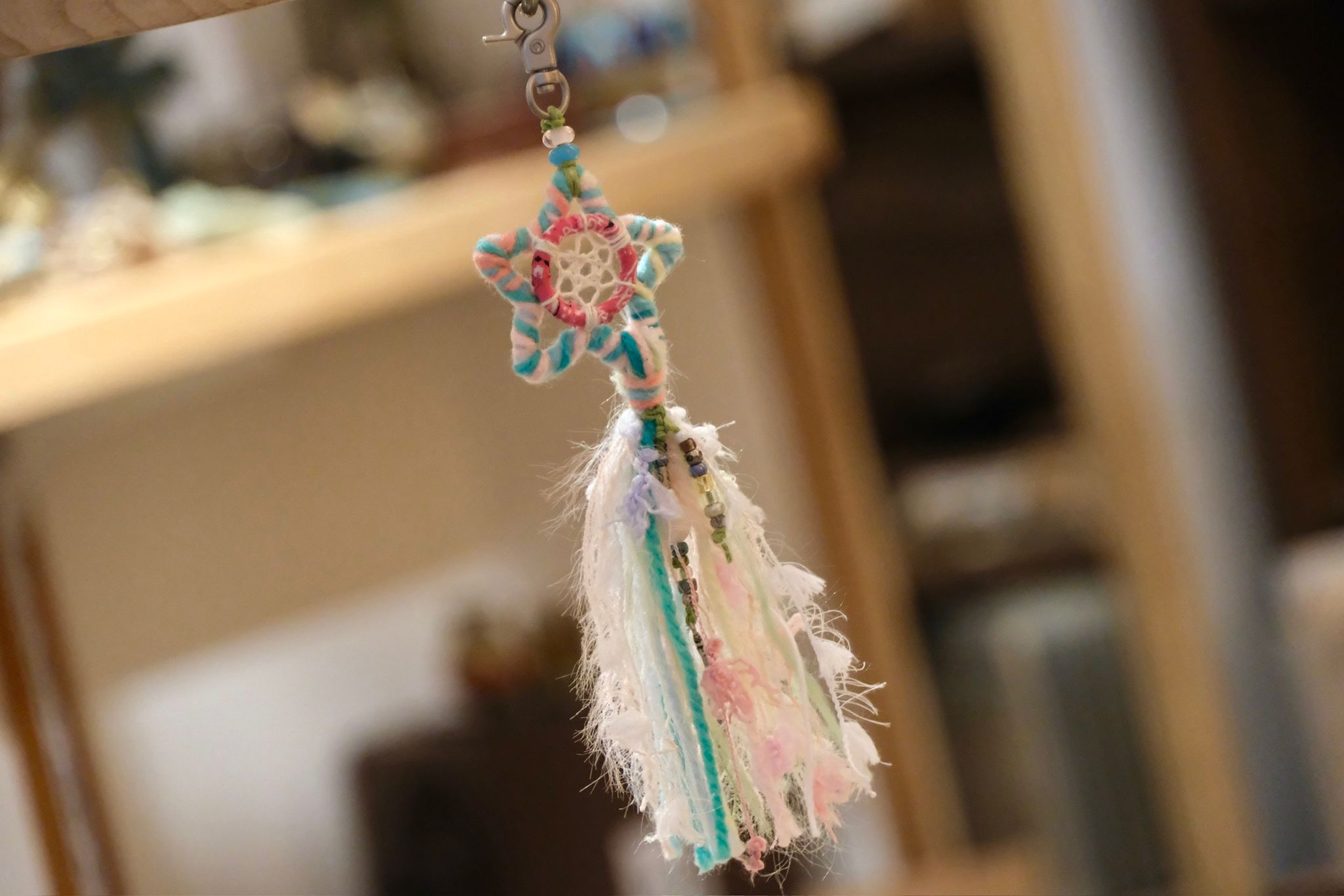
Mishtar: In Native American culture, dreamcatchers can filter out bad dreams and unite and protect tribes. We wanted our work to convey positive messages, and to help people learn about the heritage and traditional significance of dreamcatchers.
The connections between people are like threads. The weaving and knots in the dreamcatchers are our bonds. The web created by the knots represents our interconnectedness. Often, this interconnectedness is exactly what we all need.
Have you led creative workshops for people with disabilities before?
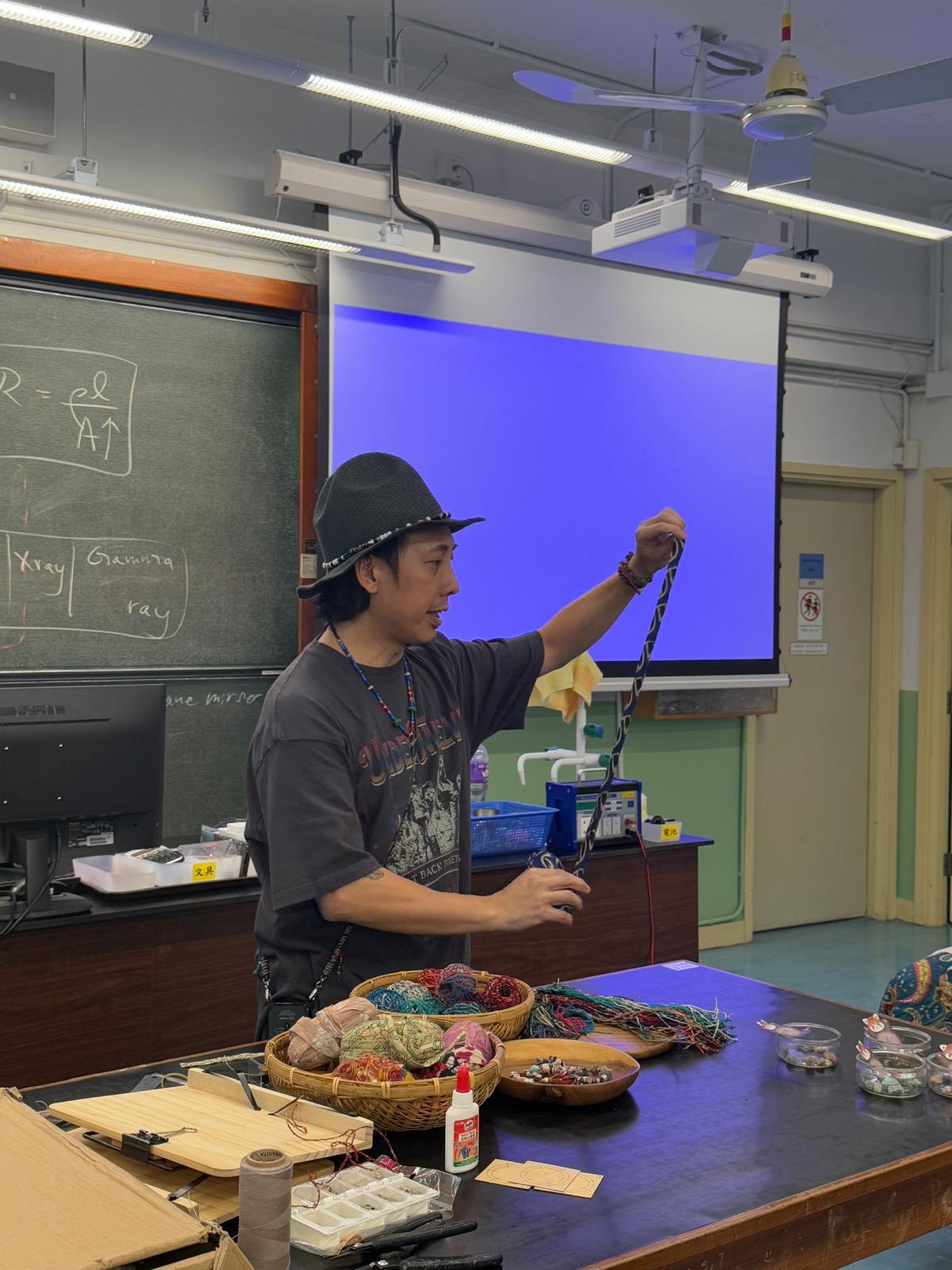
Mishtar: This is the first time we’ve collaborated with people with disabilities. We’re very grateful for the invitation from The Hong Kong Jockey Club Community Project Grant: stART Up Community Arts Project.
.jpeg) |
 |
What surprised you most during the inclusive workshop? And what did you find challenging?
Mishtar: We were surprised by the difference in participants’ ages! The youngest and oldest were 79 years apart.
The most challenging part was digesting and conceptualising participants’ ideas because they were all very expressive and creative.
Were there any points in the workshop that made you reconsider the meaning of “creation” and “collaboration”?
Mishtar: Some of the participants with disabilities were shy and not used to expressing themselves. But the students from Jockey Club Ti-I College listened carefully, and suggested useful words, images and other artistic skills to help bring their co-creation to life. They managed to turn fragmented ideas into artworks.
There were also moments when the participants with disabilities shared personal stories with the students, exchanging and passing on their experiences.
What are your thoughts on “imperfection” in art creation?
Mishtar: The theme of this collection is “Dreams and Aspirations”. Participants were encouraged to use the full power of their imagination. Something that’s “imperfect” in one context may be perfect for their unique dreamscape.
What would you like the audience to take away from your work?
Mishtar: We hope the audience feels the positivity and sense of freedom in this collection, and that the works encourage them to take the first step towards their dreams or their connections with others.
 |
.jpeg) |
What is the role of art in an ideal inclusive community?
Mishtar: Ideally, art would be integrated into every part of our lives, with more exhibition spaces and opportunities to nurture public participation.
Who is your favourite artist?
Mishtar: Nature! As the seasons pass, every plant and object changes its appearance, revealing the beauty of the cycles of life. This constant change is an art form itself.
See YAF blog
1/08/2025
Spotlight On YAFies: Zoe Wong
1/10/2024
Spotlight On YAFies: Lola Clavel and Stephanie McNicol
1/06/2023
Spotlight On YAFies: Molly Wong
1/05/2023
Spotlight On YAFies: Karen Pow
1/04/2023
Audition Tips for Actors
1/04/2023
Auditions Tips for Dancers
1/03/2023
Spotlight on YAFies: Chao Harn-kae
1/02/2023
Spotlight on YAFies: Kessay Chan
15/12/2022
Spotlight on YAFies: Wendy Tsang
1/12/2022
Spotlight on YAFies: Christopher Chung
Comments